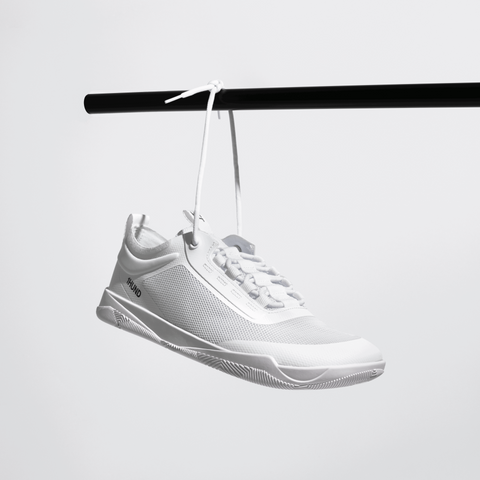
Stop sabotaging your training with the wrong shoes. When your lifts, conditioning, and recovery are all dialed in, sloppy footwear can quietly hold you back. Many athletes clean up their program, sleep, and food, but still train in shoes that work against their feet instead of with them.
Not all barefoot-style shoes help performance. The wrong pair can steal power from your squat, throw off your balance in heavy hinges, and make fast cuts feel sketchy. Instead of more strength and better movement, you end up fighting your own footwear.
We want to help you avoid that. As spring and summer sessions pick up, it is the perfect time to fix the weak link between you and the floor. We will walk through the most common mistakes athletes make when buying barefoot gym shoes and how to choose better gear for lifting, hybrid work, and daily wear. At 1HUND, our focus is zero-drop, barefoot-inspired footwear built for real training, not just casual steps.
Minimalist Style vs. Performance-Ready Barefoot Gym Shoes
Many athletes hear "minimalist" and think any flat, flexible shoe will be great for lifting and conditioning. That is where trouble starts. A casual minimalist shoe might feel light and free, but that does not mean it is built for heavy weight or fast changes of direction.
One common mistake is picking a flimsy shoe that bends in half with almost no effort. It might feel cool for walking or sitting, but under a loaded barbell, that softness can wobble your base. When the sole folds, your knees and hips must work harder to find stability, and you lose clean power transfer into the floor.
Performance-ready barefoot gym shoes should still feel low and connected, but they need structure where it counts.
- A stable, flat base for squats, deadlifts, and presses
- Secure lockdown so your foot does not slide during lateral work
- Durable upper materials that can handle high-volume training
You want that barefoot feel, but not bare minimum support. Your shoes should match the weight you lift and the speed you move at.
Getting Foot Shape and Fit Wrong in the Name of “Barefoot”
There is a common myth that if a shoe is labeled "barefoot," any foot will magically adapt. Many athletes squeeze into narrow toe boxes because they think that snug pain is part of the process. It is not. If your toes cannot spread, your base is already weaker.
Barefoot-style training works best when your toes have room to splay. A good fit lets your forefoot widen as you brace, while your midfoot and heel stay locked in. You should feel secure, not squished.
The right barefoot fit usually looks like this:
- Enough width so toes can spread without pressing hard into the sides
- A snug midfoot that does not slip when you cut or push a sled
- A heel that stays put during jumps, landings, and sprints
When you try on shoes or order online, do it with timing in mind. Feet can swell by the end of a warm day or a long session. If the shoe feels tight even though your feet are already a bit bigger, it will only get worse under load. Leave a little functional space in the front so you can sprint, jump, and land without your toes jamming.
At 1HUND, if you are between sizes, we recommend sizing up. It is better to have some wiggle room than to work around swollen feet later.
Forgetting About Stability and Grip for Heavy and Hybrid Work
Some athletes chase the softest, bendiest shoe they can find. Total flexibility sounds great in theory, but in practice, it can ruin your base for heavy lifts. Ultra-soft cushioning might feel comfy during a walk around the gym, then turn into mush as soon as you load the bar.
For serious strength work, especially when you mix in conditioning, you want the outsole to support you like solid ground. When you shop for barefoot gym shoes, pay close attention to the soles.
- Flat, grippy rubber that locks into rubber floors and turf
- Minimal compression when you push hard into the floor
- Firm edges that keep you stable during lateral steps and cuts
Hybrid athletes face an extra challenge. If your sessions blend barbell work, short runs, sled work, and change-of-direction drills, your shoe must handle quick transitions without slipping or feeling wobbly. The goal is simple: when you plant your foot, the shoe should stay quiet. No rolling, no sliding, no squishy guesswork.
Using One Barefoot Shoe for Every Phase and Every Session
As the weather warms up, training volume often climbs. Athletes stack more sessions, add outdoor circuits, and chase new PRs. At the same time, many grab a fresh pair of barefoot-style shoes and try to use that single pair for absolutely everything.
One shoe might not be right for all tasks. A model built for stable lifting and short, sharp efforts is not ideal for long road runs. If you try to cover everything with one tool, something usually gives, often your feet or your form.
Think about your training plan when you choose footwear:
- Strength-focused phases respond best to ground feel and a very stable base
- Outdoor circuits need durability and traction on mixed surfaces
- Longer runs may call for different cushioning and support than heavy squats
-style footwear, start even slower. Use your barefoot gym shoes for warm-ups, lighter accessories, or technique days. Keep your higher-impact or long-distance work in what your body already knows, then adjust as your feet adapt.
Rushing the Transition and Ignoring Recovery Signals
Motivated athletes tend to go all in. New barefoot shoes arrive, and suddenly every single session happens in them. No plan, no ramp-up, just full send. That fast jump is one of the biggest mistakes we see.
Your calves, Achilles, and arches take time to adjust to zero-drop and more natural loading. If you leap from built-up shoes straight into daily barefoot work, your body will probably push back. You might notice tight calves, cranky Achilles, or sore arches right as your training is heating up for the sunny season.
A simple, patient progression can keep you moving forward:
- Week one, use barefoot gym shoes for warm-ups and light accessories
- Week two, add one or two full sessions on easier days
- Over several weeks, slowly build volume and intensity in them
Pay attention to soreness and bar speed. Some muscle fatigue is normal; sharp pain is not. Give yourself rest when tissues feel overworked. The goal is long term strength and power, not a quick change that leads to a setback.
Leveling up Your Training with Barefoot Gym Shoes That Match Your Training
When we look at the most common mistakes, a pattern shows up. Athletes confuse casual minimalist styles with performance-ready barefoot gym shoes. They ignore their own foot shape, chase extreme flexibility at the cost of stability and grip, force one shoe to do jobs it was not built for, and rush the transition.
We see barefoot gym shoes as a performance tool, not a trend. Chosen and used with intention, they help build stronger feet, better balance, and cleaner power transfer in your lifts and hybrid sessions. The key is matching the shoe to your training, your feet, and your timeline.
As you head into longer, hotter days of training, take a hard look at what you are wearing between you and the floor. Do you have space to splay your toes? Is your base stable under heavy load? Does your shoe grip well on the surfaces you actually train on? If not, it may be time to upgrade.
At 1HUND, we build zero-drop, barefoot-inspired performance footwear for strength work, hybrid athletes, and everyday wear. When your shoes match your training, every rep, step, and sprint has a better shot at working in your favor.
Feel The Ground, Power Your Training
If you are ready to lift, sprint, and move with better balance and control, our barefoot gym shoes are built to help you get there. At 1HUND, we design footwear that keeps you closer to the ground so every rep feels more natural and connected. Upgrade your training experience today and feel the difference with every step.