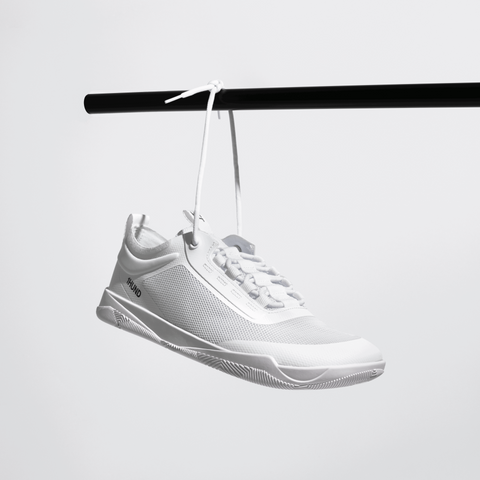


Modern cushioned shoes feel soft, but they ask your feet to do less work. Over time, the small muscles in your arches, toes, and ankles get a little lazy. When we suddenly swap to barefoot training footwear, those sleepy muscles get shocked. That is when people feel sore arches, cranky calves, or tight tendons.
When we build foot strength first, the story changes. Strong, active feet give you a wider, more stable base for lifting. That means better balance on heavy squats and pulls, steadier landings on jumps, and cleaner force transfer to the floor during sprints and change-of-direction work. Your body can stack better over your feet, so the whole chain works more smoothly.
This 4-week plan works well for lifters, field and court athletes, and anyone in a winter strength block getting ready for spring. It is especially helpful if you are moving into barefoot training footwear for the first time or coming back after time off from training.
Know Your Starting Point Before You Change Your Footwear
Before we change shoes, we want a quick check of what your feet can do right now. You can use three simple home tests.
- Single-leg balance: Stand on one foot for up to 30 seconds with eyes open. Switch legs. Then try the same thing eyes closed. Notice if one side wobbles more, or if your toes claw the floor right away.
- Calf raise endurance: Stand near a wall or counter. First, do as many smooth double-leg calf raises as you can without rushing. Then try single-leg calf raises on each side, slow and controlled, even if it is only a few. Feel for burning in the muscles, not pain in the joints.
- Toe mobility: Barefoot, spread your toes as wide as you can. Then try to lift only your big toes while the others stay down. After that, press the big toes down and try to lift the other toes. It is okay if it feels clumsy; we just want to see what your brain and feet can coordinate.
There are also red flags to respect. Sharp heel pain, arch soreness that lingers all day, Achilles tightness that is worst in the morning, or any numbness in the forefoot are signs to slow down. If those are present, it is smart to talk with a medical or sports professional before you go harder in barefoot training footwear.
Use what you found to pick your starting load. If balance is tough and toe control is low, begin with just warm ups in barefoot style shoes. If things feel okay but not great, you might do warm ups and some lighter accessory sets. If your base is solid, you can try full lower-body sessions in them while still monitoring how your feet feel over the next few days.
Weeks 1, 2: Foundation Phase to Wake up Dormant Foot Muscles
In the first two weeks, we focus on gentle, high control work to wake things up instead of crushing them. Aim for 3 to 4 days per week.
Core drills and sample dosage:
• Short foot holds: 3 sets of 5 to 10 second holds per foot
• Towel curls: 2 to 3 sets of 10 to 15 curls per foot
• Toe splaying: 2 sets of 10 slow spreads
• Seated calf raises: 3 sets of 12 to 15 reps
• Ankle alphabet: 1 or 2 rounds per ankle, draw big slow letters
Keep the effort level low to medium. You should feel muscles working, not sharp pain. Think of it like teaching your feet a new language.
Early in this phase, ease into barefoot training footwear by using them for 5 to 15 minutes each session. Great spots to use them include dynamic warm ups, light mobility, band work, or easy walking cooldowns. For heavy barbell lifts, you can stay in your usual shoes while your feet adapt.
Mild arch and calf fatigue is normal at first. That might feel like a gentle, tired ache that fades within a day. Problem pain is sharp, focused in one small spot, or worsens every day. Helpful recovery habits include light calf stretching, rolling the arches with a soft ball or water bottle, and taking short breaks off your feet during long days of standing.
Weeks 3, 4: Strength and Load Phase for Barefoot Training Footwear
As your feet wake up, we slowly add more strength and a bit of impact. Stay at 3 to 4 sessions per week, but bump the challenge.
Progressed drills and sample ranges:
• Single-leg calf raises: 3 sets of 8 to 12 reps per side
• Tiptoe holds: 3 sets of 15 to 30 second holds
• Heel to toe walks: 2 sets of 10 to 15 steps forward and back
• Short loaded carries in barefoot shoes: 3 walks of 20 to 40 steps
• Small controlled hops in place: 2 or 3 sets of 10 hops, soft landings
Keep the hops low and quiet, like you are trying not to make noise on the floor. If the impact feels too aggressive, stay with the non jumping work longer.
During these weeks, increase your barefoot shoe time step by step. A simple guideline is to avoid increasing your barefoot volume by more than about 10% from one week to the next. That might look like moving from only warm ups, to warm ups plus accessory work, then into some main lifts or short field prep drills.
To fit this into common strength plans without overloading, slide the foot work into warm ups or finishers on lower body or full body days. If you already do a lot of plyometrics or running, scale back those activities when you first increase barefoot exposure. As your feet handle the load better, you can slowly bring higher impact work back in.
Smart Safeguards to Avoid Overuse Injuries as Your Feet Get Stronger
Good guardrails keep progress moving without surprise setbacks.
Helpful load rules:
• Avoid back to back high impact days in new shoes
• Use a simple pain scale from 0 to 10, and back off if you sit above a mild level for more than a day
• Track how many sets, reps, and minutes you spend in barefoot footwear each week
• Change only one thing at a time, like impact, volume, or shoe time
Recovery that actually helps is simple and repeatable. Daily gentle calf and plantar fascia mobility, short foot baths or contrast water on heavy lower body days, and use of recovery tools, like soft rollers or massage devices, can all help manage tissue stress.
Know when to slow down. If you notice swelling, stiffness that is worst in the morning and sticks around, or pain that lasts more than 48 hours, drop to the previous week of the plan. If those signs keep showing up, it is wise to talk with a medical or sports therapist to get clear guidance.
Step Into Your Next Training Block with Stronger, Barefoot Ready Feet
After week four, you do not need to stop. Shift into a simple maintenance bundle you keep year round. Three or four go to drills work well: short foot holds, single-leg calf raises, toe splaying, and slow heel to toe walks fit easily into any warm up. As spring conditioning, outdoor runs, and sport practices pick up, those habits help your feet stay ready for more work in barefoot training footwear.
Treat this 4-week plan as your base layer, not a finish line. As seasons change and you move from winter indoor lifting to higher impact summer sessions, keep the same patient mindset. Increase time and impact gradually in your barefoot shoes; listen to your feet, and cycle back to earlier weeks if anything feels off.
At 1HUND, we build zero-drop, barefoot-inspired training shoes and recovery gear to match this kind of smart, steady progression. Our goal is simple: help lifters and athletes step into their training with stronger, more aware feet, so every rep, sprint, and jump feels more connected from the ground up.
Feel The Ground, Unlock Your Strength
If you are ready to move with more control, stability, and power, our barefoot training footwear is built to help you get there. At 1HUND, we design every pair to keep you connected to the ground so you can lift, run, and train with greater awareness. Upgrade your next session with gear that supports natural movement and real performance gains.