

Why Your Footwear Matters in Strength and Conditioning
Strong feet help build a strong body. When you train in shoes that change how your feet move, your squat, deadlift, and even your sprints can feel off. Barefoot training footwear gives your feet room to work the way they were built to move, which can make your whole body feel more solid and stable under load.
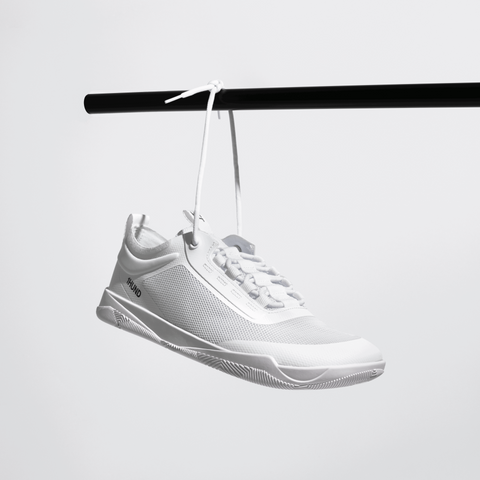
Traditional training shoes usually come with raised heels, narrow toe boxes, and stiff soles. That mix can throw off your balance and stop your toes from gripping the ground. Over time, that can limit how you move and how much force you can put into the floor. At 1HUND, we design durable, foot-shaped barefoot footwear with a zero-drop platform and a wide toe box so your feet can move naturally in training, recovery, and daily life.
The Benefits of Training Barefoot or Barefoot-Like
When you think about lifting or conditioning work, you might picture barbells, kettlebells, or sleds. But your feet are your first contact with the ground. Barefoot training footwear helps bring them back into the game.
Here are a few key benefits many people notice when they switch from typical cross-trainers or cushioned running shoes:
- Foot strength and stability
- Better movement mechanics
-
More sensory feedback and control
With a thin, flexible sole and a true foot-shaped design, your toes can spread out, grip, and stabilize. During heavy lifts like squats and deadlifts, this can help keep your knees from wobbling and give you a firmer base. When you cut, jump, or land from a box, that natural toe splay helps your body react faster to the ground.
Flat, zero-drop barefoot training footwear puts your heel and forefoot on the same level. That can help your ankles move more freely and support a more natural posture from your feet up to your hips and spine. Instead of your weight sliding forward into your toes like it often does in raised-heel shoes, you are more balanced over the middle of your foot.
You also get better sensory feedback. With less foam between you and the floor, your brain gets a clearer signal about where your body is in space. This can make it easier to feel when your weight shifts in a squat, when you are twisting in a lunge, or when one side is doing more work than the other. Over time, that ground feel can help you clean up your technique and reduce weird compensations.
Key Features to Look for in Barefoot Training Footwear
Not all flat shoes are the same. If you want barefoot-style shoes that actually support your training, it helps to know what to look for.
Zero-drop platform:
This means the heel and forefoot are the same height. A true zero-drop platform lets your joints stack naturally over your feet. For lifts like squats, deadlifts, and Olympic movements, that level base supports:
- Better force transfer into the ground
- More consistent bar paths
-
A more stable center of mass
Wide toe box and foot-shaped design:
Your toes should be able to spread out without pushing into the sides of the shoe. A wide, foot-shaped toe box gives you:
- More balance during heavy or single-leg work
- Room for toe splay when you drive out of the bottom of a squat
- Less pinching and long-term strain on the front of the foot
Flexible, thin, yet durable sole:
You want enough ground feel to balance and react, but also enough toughness to handle real training surfaces. Look for soles that flex easily when you bend and twist the shoe by hand, but still feel sturdy under load on gym floors, turf, or outdoor areas.
When comparing barefoot training footwear, prioritize zero-drop, a truly wide toe box, and a flexible but durable sole. Those three details set the foundation for natural movement and long-lasting use.
Matching Your Footwear to Your Training Style
Your ideal shoe will depend on how you train. Barefoot training footwear should match your main movements, not work against them.
Strength- and powerlifting-focused:
If you spend most of your time under a bar, look for very stable, flat barefoot training footwear with:
- Excellent ground feel
- A snug midfoot and heel lockdown
-
Good lateral stability for wide stances
You want to feel glued to the floor when you pull a deadlift or drive out of the bottom of a squat.
High-intensity and multi-directional training:
If your strength and conditioning program is heavy on plyometrics, sprints, and change-of-direction drills, choose barefoot training footwear with:
- Secure lacing or straps to keep your foot from sliding
- Durable uppers that can handle cuts and stops
-
Enough flexibility to let your foot move, but not roll
Hybrid training and everyday wear:
Many people blend lifting, conditioning, walking, and mobility work in the same week. For that mix, a more versatile barefoot shoe can be helpful. Look for pairs that:
- Feel good under a barbell and on a walk
- Breathe well so your feet stay comfortable throughout the day
-
Have a simple, clean look that works in and out of the gym
When done right, the same shoe can carry you through training sessions, easy recovery walks, and casual daily wear.
How to Transition Safely to Barefoot Training Footwear
Switching too fast can catch your feet, calves, and Achilles off guard. Your body needs time to adjust to the new load and range of motion.
Start gradually
When you first switch to barefoot training footwear, limit use to low-impact sessions for the first few weeks. For example:
- Wear them for warm-ups and cooldowns
- Use them on accessory lifts instead of heavy main sets
-
Try short conditioning blocks instead of full, long workouts
Integrate foot and lower-leg strength work
Simple drills can support the change, such as:
- Short foot exercises where you gently pull the ball of the foot toward the heel
- Calf raises on the floor
-
Single-leg balance work on flat ground
Listen to your body and progress slowly
Some mild soreness in newly worked muscles is normal, but sharp or lingering tendon pain is a warning sign. If your calves, arches, or Achilles feel tender for more than a day or two, pull back your barefoot time, lower the impact level, and build up again more slowly.
Fit, Sizing, and Practical Buying Considerations
Even the best design will feel wrong if the fit is off. Take a bit of time to get the shape and size right.
Start with shape and size
Your longest toe should have some space at the front, and your toes should not feel squeezed from the sides. At the same time, your midfoot and heel should feel secure, not loose. When you walk, cut, or jump, your foot should not slide inside the shoe.
Think about materials and construction
Good barefoot training footwear should feel:
- Durable enough for repeated sessions
- Grippy on common training surfaces
- Breathable, so your feet do not feel trapped
-
Easy to clean after gym floors or outdoor work
Budget, longevity, and value
When evaluating barefoot training footwear, prioritize fit and shape over color or trends. A pair that matches your foot and your training style is more likely to hold up and stay in your regular rotation for workouts, recovery walks, and everyday use.
Why Consider 1HUND for Your Barefoot Training Footwear
At 1HUND, we build barefoot training footwear with a flat, zero-drop platform and a truly wide, foot-shaped toe box to support the strength, stability, and natural movement patterns we have talked about here. Our goal is simple: give your feet room and freedom so the rest of your body can do its job.
We focus on durable designs that can move from training to recovery to everyday wear, so you do not need different shoes for every part of your day. By centering on natural movement rather than traditional shoe trends, we aim to help you reconnect with your feet, one step and one rep at a time.
Unlock Stronger, More Natural Movement
If you are ready to feel the ground, improve your stability, and build real strength from the feet up, explore our curated line of barefoot training footwear. At 1HUND, we design each pair to encourage natural mechanics so you can train with confidence and control. Take the next step toward better performance and healthier movement patterns by choosing footwear that actually supports the way your body is built to move.