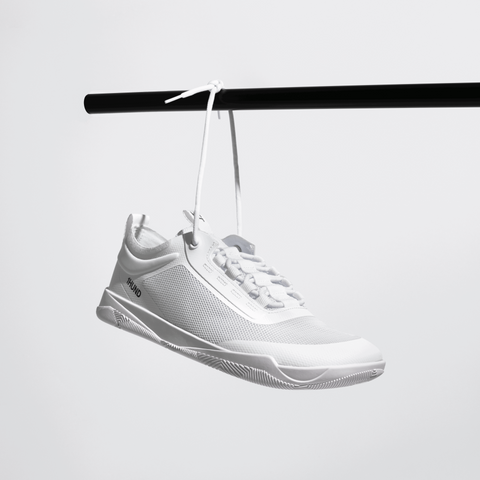


Leaving your heeled lifting shoes and moving into barefoot gym shoes can unlock strength you did not know you had. It lets your feet actually work, instead of just riding along for the lift. When the weather warms up and training heats up, that switch can feel tempting, but it can also feel a little scary.
Many lifters, CrossFit athletes, and everyday gym fans are choosing flat, zero-drop shoes for a reason. Barefoot-style shoes help you feel the floor, grip with your toes, and balance better. That stronger base can mean more stable squats and deadlifts, plus more control on every rep.
There is a catch. Losing the heel often makes squat depth harder at first. Deadlift set-up can feel strange, too, because your body has to find a new groove. That is normal. The goal is not to flip a switch overnight. The goal is to shift slowly, keep your depth, protect your joints, and come out stronger on the other side.
What Really Changes When You Drop the Heel
Heeled lifting shoes shift your weight slightly forward and provide your ankles with a boost. That raised heel makes it easier for your knees to travel forward so you can sit deeper into a squat while keeping your chest more upright. It also reduces how much ankle bend you actually need.
When you move to zero-drop barefoot gym shoes, that hidden help is gone. Your feet are level. Your heels now have to stay down on their own, and your ankles need more real dorsiflexion, which is the ability to pull your toes toward your shin. Your hips must work harder to control your path up and down. Your midfoot has to stay strong and steady to keep the bar lined up over your base.
For deadlifts, losing the heel usually lowers your whole body a bit. Your hips may feel slightly higher, your shins a touch more vertical, and the bar closer to your center of mass. At first, this can feel odd, but it can actually shorten the pull and improve force transfer from the floor, once your body learns this new position.
Adjusting Squat Mechanics and Stance Without a Heel
To maintain depth without the heel, you will likely need to adjust your stance. Do not rush this. Think of it as practice, not testing.
Try these simple changes:
- Go a little wider with your stance than you used in heeled shoes
- Turn your toes out slightly more, so your knees can track over your toes
- Focus on a tripod foot: big toe, little toe, and heel, all pressing the floor
Accept that your torso may lean forward a bit more, even on high bar squats. That is not bad as long as the bar stays over the middle of your foot and your spine stays braced. Think ribs down, big breath, and squeeze your upper back before you descend.
Helpful progressions when you first move into barefoot gym shoes:
- Tempo squats, with a slow 3 to 5 second lower to feel your balance
- Paused squats at your sticking point to build confidence in the bottom
- Box squats to a consistent height so you groove depth without bouncing
Use lighter loads for these drills and treat every rep like a skill practice. Over time, your ankles, hips, and feet will adapt, and that new squat pattern will feel natural.
Rebuilding Your Deadlift From the Floor Up
Deadlifting in zero-drop shoes starts with a clean setup. Stand so the bar is roughly over your midfoot, not your toes. When you reach down, bring your shins close to the bar without slamming into it. Set your hips where you can feel tension in your hamstrings and glutes, while your spine stays neutral and your lats feel locked in.
Root your feet. Grip the floor with your toes, then think about spreading the floor apart with your feet as you push. This helps your knees stay in line with your toes and keeps the bar path vertical, which is what you want for a strong pull.
A simple progression:
- Rack pulls from just below the knee
- Block pulls from mid-shin
- Full-range deadlifts from the floor
Mix in Romanian deadlifts and tempo pulls with a slow lower to build hamstring strength and control. As you gain comfort, your starting position will feel smoother, and the bar will break off the floor without that wobbly, searching feeling.
Mobility Priorities for Barefoot Squats and Deadlifts
Heeled shoes often hide stiff ankles and tight calves. Barefoot training brings those issues to the front. You can treat that as a problem, or as feedback that helps you grow.
For ankles and calves, build a simple routine:
- Straight-leg calf stretches, and bent-knee calf stretches
- Loaded dorsiflexion drills, like driving your knee forward over your toes while the heel stays down
- Split squat positions with the front knee tracking over the toes, keeping control
For hips, work on both mobility and stability. Deep squat holds, with support if needed, can help your body get used to sitting low with heels flat. 90/90 hip rotations teach your hips to rotate smoothly, while lateral lunges help you feel strong in wider stances.
Do not forget the feet themselves. Gentle soft-tissue work on the calves and the bottom of the foot, short-foot drills where you learn to lightly pull the arch up, and progressive single-leg calf raises all help your lower leg handle the new demand.
A Simple 6 to 8 Week Plan and Making Barefoot Your New Normal
A smart switch is a slow switch. Over about two months, you can move from heeled lifters to barefoot gym shoes without losing strength.
Here is one way to phase it in:
- Weeks 1 to 2: Do warm-up sets and lighter training days in barefoot shoes, keep heavy top sets in your heeled lifters
- Weeks 3 to 4: Split your top sets, some in flats, some in heels, while you keep up ankle and hip work
- Weeks 5 to 6 and beyond: Most or all lower-body work in barefoot shoes, heels only if a heavy test-day feels better that way
At the start, pull back slightly on intensity so your joints and soft tissue can adapt. As your control and comfort increase, gradually return to your usual loads. Monitor any extra soreness in the feet, ankles, and calves, and use off days to support mobility and recovery. Good sleep and steady hydration matter more as training volume increases in warmer seasons.
Over time, the new stance, the slightly different squat torso angle, and the flatter deadlift setup will stop feeling strange. This stance will become your new normal.
At 1HUND, we design zero-drop, barefoot-style training shoes for this exact kind of work, from heavy barbell days to mixed cross-training and even casual daily wear. When you treat this switch as a full performance upgrade, not just a new pair of shoes, you give your body space to build stronger feet, steadier positions, and more confident lifts that carry you through spring, summer, and beyond.
Feel The Ground, Elevate Your Training
If you are ready to build stronger feet and more natural movement, our barefoot gym shoes are designed to help you get there. At 1HUND, we focus on footwear that supports better form, balance, and control under every load. Step into your next workout with gear that keeps you stable and connected to the ground. Try a pair today and feel the difference in your lifts, conditioning, and everyday training.