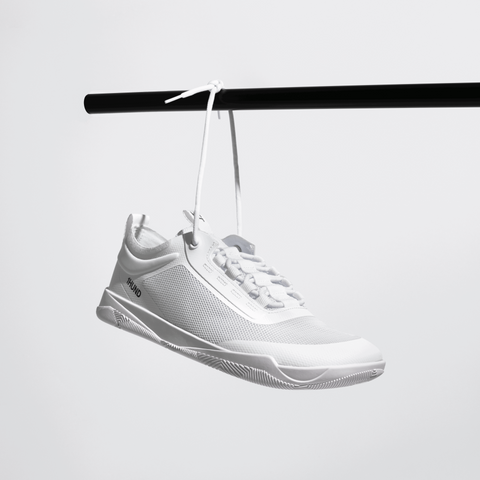


Freedom to Move: Why Toe Space Changes Everything
Wearing shoes that actually let your toes spread out feels like a deep breath for your feet. The pressure across the front of your foot eases, your toes stop fighting for space, and your whole stance suddenly feels more grounded. If you have spent years in narrow trainers, that first step in a genuinely foot-shaped shoe can be surprisingly noticeable.
Our feet are naturally widest at the toes, not at the ball or the midfoot. Traditional athletic shoes often ignore that, tapering into a point that squeezes the toes together and changes how we walk, run, and lift. At 1HUND, we built a wide toe box, foot-shaped training shoes that respect the way feet are actually built, so strength athletes and active people can move, train, and recover with less restriction.
In this guide, we will break down why toe space matters, how conventional shoes can work against you, what to look for in wide-toe-box training shoes, and how to transition without beating up your feet in the process. If you care about long-term comfort, stronger lifts, and healthier movement, your toes are a great place to start.
How Traditional Shoes Restrict Your Feet
Most mainstream athletic shoes are designed around a sleek, tapered silhouette that looks fast on a shelf. The problem is that the shape does not match a natural human foot. A pointed or narrow toe box compresses the forefoot, limiting toe splay, which is the natural spreading of your toes when you stand, walk, or load a barbell.
That squeeze changes everything your feet are trying to do. When your toes cannot spread, they cannot create a wide, stable base. You end up balancing on a narrowed platform, which can feel wobbly during squats, lunges, or even long days on your feet. Add in elevated heels, very stiff midsoles, and thick layers of cushioning, and your posture starts to shift forward, often putting more pressure into the forefoot.
For people who train hard or are on their feet a lot, these design choices can lead to hot spots and pain across the front of the foot. Many common issues are linked to narrow, restrictive shoes, including bunion irritation, hammertoe development, nerve irritation between the toes, plantar fascia strain, and general arch fatigue. The feet are your foundation, so when that foundation is compromised, the rest of the body has to compensate.
Those compensations travel up the kinetic chain. If your feet cannot stack and stabilize, your knees may cave or twist to find balance. Your hips may shift or tilt. Your lower back can end up taking on more force than it should because the load is not being shared well from the ground up. Over time, this can affect how confident and strong you feel when you are underweight or during dynamic conditioning.
Why Wide Toe Box Shoes Support Comfort and Health
A wide toe box is not about making the entire shoe oversized. It means creating real space at the front of the shoe so your toes can spread without hitting the sides or top, even as your foot expands under load. Standing, lifting, and long walks all cause the foot to widen slightly, so a good foot-shaped training shoe takes that into account.
When your toes can splay naturally, your foot creates a broader base of support. That wider platform gives you better balance and stability, especially in movements that demand strong contact with the ground, like squats, deadlifts, kettlebell swings, and athletic stance work. Pressure spreads more evenly across the forefoot, which helps reduce hot spots, blisters, and that burning feeling under the ball of the foot.
Less compression at the front of the shoe can also help circulation. Many people notice fewer tingling sensations, less numbness, and reduced swelling when the toes are not held in a constant squeeze. This can matter a lot if you spend long hours on your feet or if your training sessions run long.
Wide-toe-box, foot-shaped training shoes also support better alignment. When the big toe is allowed to stay straight instead of being pushed inward, it can do its job as a key support for the arch. That alignment helps with force transfer, so when you push into the ground in a squat, jump, or sprint, more of that energy is directed into the movement, not lost in a collapsed or twisted forefoot.
Key Features to Look for in Foot-Shaped Training Shoes
Not every wide shoe is truly foot-shaped. We design around the natural outline of the foot, which means a secure fit in the heel and midfoot with generous width and height in the toe box. Your heel should feel locked in, your midfoot supported, and your toes free, not swimming, across the front.
Beyond width, several other design elements matter for training and daily wear.
- A low or zero heel-to-toe drop for neutral alignment
- Flexible yet durable soles so your foot can move and feel the ground
- Enough structure in the midfoot and heel for security under load
- Outsoles that grip well on gym floors and outdoor surfaces
Materials and construction play a big role, too. Breathable uppers help keep feet comfortable through tough sessions, so you are not stewing in sweat. Abrasion-resistant overlays can withstand gym environments. At 1HUND, we focus on creating shoes that are durable enough for serious lifting and conditioning, yet light and comfortable enough for everyday wear.
The goal is consistency. When your training shoes also feel good for errands, walks, and casual wear, your feet spend more time in a natural position. Over weeks and months, that consistency can add up to better comfort and stronger, more capable feet.
Transitioning to Wide Toe Box Shoes Without Pain
Shifting into wide-toe-box or more natural footwear is a positive change, but it should be treated like a new training block. Your muscles, tendons, and ligaments will need time to adapt to the extra movement and new loading patterns.
A simple phased approach can help:
- Start with short, low-impact wear periods, like errands or light walks
- Gradually extend the time as your feet feel comfortable
- Add easy training sessions, such as warm-ups or accessory work
- Progress to heavier lifts or higher-intensity workouts once your feet feel ready
Support the transition by strengthening and mobilizing your feet. Toe spreads, where you actively try to separate your toes, help wake up small foot muscles. Towel scrunches and short foot exercises can build strength in the arch. Gentle calf and plantar fascia stretches, along with single-leg balance drills, teach your feet and ankles to stabilize in a more natural position.
Expect some soreness or fatigue at the start, similar to how a new exercise makes you aware of muscles you did not know you had. Sharp pain or significant discomfort is a sign to scale back. Alternating between your older shoes and your new foot-shaped training shoes during the early stages is a smart way to ease in without overloading your system.
Choosing the Right Wide Toe Box Shoe for Your Training
Choosing the right shoe starts with how you train. Strength-focused lifters often prefer a flatter, more stable platform that keeps them close to the ground for heavy squats, presses, and pulls. Hybrid athletes who mix lifting with conditioning, classes, or outdoor work may want a blend of stability and flexibility.
Fit is non-negotiable. When you try on foot-shaped training shoes, stand up and let your toes fully relax. Check that:
- Your toes can spread without pressing into the sides
- You have a bit of space in front of the longest toe
- The midfoot and heel feel secure, not sloppy
- There is no pinching at the widest part of the foot
Consider your foot width, arch height, and any existing issues such as bunions or sensitive nerves when selecting your size and model. Different brands and designs will feel slightly different, so it helps to pay attention to how your feet respond, not just what the tag says.
Versatility is a big bonus. A shoe that feels solid under a barbell, steady during conditioning, and comfortable for everyday wear helps keep your feet in a healthy position most of the time. That consistency is what builds long-term comfort, stability, and confidence with every step and every rep.
Stronger Steps Ahead: Commit to Healthier Feet
When your toes have room to spread, and your shoes match the natural shape of your feet, you give your body a better foundation. Comfort goes up, unnecessary strain goes down, and your stance under the bar or on the street feels more stable and powerful.
Foot health and performance are directly connected. Better alignment, stronger support from the ground, and less day-to-day discomfort free up more energy for training and enjoying an active life. At 1HUND, we believe that wide-toe-box, foot-shaped training shoes are not just about avoiding pain; they are about unlocking more natural movement, stronger lifts, and more comfortable days on and off the gym floor.
Unlock Stronger, More Natural Movement Today
If you are ready to train the way your body was designed to move, our wide toe box shoes are the next step. At 1HUND, we design every detail to respect your foot’s natural shape so you can build strength, stability, and control from the ground up. Explore the collection, choose the fit that matches your training style, and start feeling the difference in your next session.