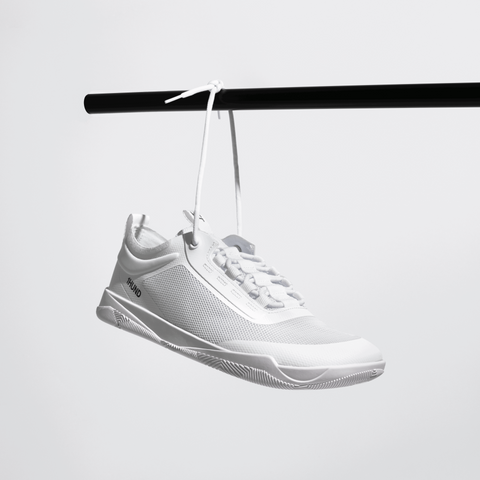


Unlocking stronger legs on leg day starts at the floor. What you put between your foot and the ground changes how every squat, lunge, and deadlift feels. Thick, squishy shoes can hide weak spots in your form. Barefoot-style shoes expose them, which can be a good thing if we treat it with respect.
The big fear is clear: will barefoot leg day wreck our knees? It does not have to. The better question is: How do we switch in a way that feels safe, steady, and smart? When we use barefoot training shoes with a plan, they can help us build stronger legs, more stable knees, and cleaner movement patterns, without doing anything reckless or extreme.
As days get longer and the weather warms up, many of us start pushing leg day harder. That is exactly when a smarter, more grounded approach to footwear can make the biggest difference.
Why Barefoot Leg Day Feels So Different for Your Knees
Barefoot-style, zero-drop shoes keep your foot closer to the floor. There is less foam, less tilt, and fewer surprises under load. Your toes can spread, your foot can grip, and you can feel your weight shift as you move. That extra feedback can help you stay balanced under the bar.
When your foot is stable, your ankle has a clearer job. Good ankle motion lets your knees track in line with your toes during squats and lunges. If your ankles are stiff or your feet cave inward, your knees often cave in too, which can feel sketchy. Barefoot training shoes make those issues easier to spot because they are no longer hidden by soft padding or a big heel.
We also need to be honest about what we feel. There is a big difference between normal training stress and a problem. Mild muscle burn around the front of the knees or in the feet can be part of adaptation. Sharp pain inside the joint, catching, or anything that feels like a jab is not. When we switch shoes too fast, we can load tissues in a new way before they are ready, especially around the feet, calves, and knees. The key is to give your body time to adjust.
Building a Safe Transition Into Barefoot Training Shoes
A smart switch is slow on purpose. Instead of going all-in on a heavy leg day, we start small and build up.
For the first couple of weeks, try using barefoot-style shoes only for:
- Warm up sets
- Bodyweight or goblet squats
- Light Romanian deadlifts
- Unloaded split squats or lunges
Keep your heaviest sets in your usual shoes at first. As your feet and ankles get used to the new feel, start moving one core lift at a time into barefoot footwear. Many lifters like to shift deadlifts first, then squats, then lunges and step-ups.
If you are turning up your leg training for spring and getting ready for more shorts-weather, respect volume and load. When you add barefoot work, you can:
- Trim one heavy set from your main lift
- Keep reps smooth, not grinders
- Leave a little more energy in the tank at the end
Before you stack the plates, run a quick self-check. Can you do a deep bodyweight squat without your heels popping up or your knees crashing in? Can you bend your ankle so your knee reaches past your toes a bit while your heel stays flat? Do your knees feel calm, not angry, as you move? If those boxes are not checked, keep the loading modest while you work on the basics.
Technique Tweaks to Protect Your Knees When You Lift Barefoot
Barefoot squats feel different right away. Without a raised heel, your weight may shift slightly back. Think about rooting your whole foot into the floor like a tripod. That means three points down: base of the big toe, base of the little toe, and heel. From there, push your knees so they line up with your toes, not caving inside, not flaring way out.
Use cues like:
- Grip the floor with your toes
- Push the floor away, do not bounce out of the bottom
- Keep your ribs stacked over your hips
For hip-dominant moves, such as deadlifts, RDLs, and hip thrusts, barefoot training shoes really shine. A flat, stable base helps you load your hips and glutes so your knees are more like quiet hinges instead of shock absorbers. Focus on pushing your hips back, keeping the bar close, and feeling tension in your hamstrings, not strain at the front of the knee.
Unilateral work is where tiny knee issues often show up. Reverse lunges, split squats, and step-ups reveal left-right differences that thick shoes can hide. Go slower, use lighter weights, and watch your front knee. It should follow the line of the toes, not slide wildly inward or outward. If one side feels shaky, give it extra practice before you pile on weight.
Support Moves and Warm-Ups for Knee-Friendly Barefoot Leg Days
A short, focused warmup goes a long way. Before you load up, try:
- Light calf raises and gentle ankle circles
- Foot activation like towel scrunches or short foot holds
- Glute bridges or band walks to wake up the hips
The goal is simple: get ankles moving, feet awake, and glutes ready so your knees feel supported from above and below.
Support work helps too. When we train the muscles around the knee, the joint often feels more stable. Think about adding:
- Hamstring curls, lying or seated
- Terminal knee extensions with a band
- Adductor work, such as side-lying squeezes or machine work
At the end of leg day, finish with lighter, higher-rep sets in your barefoot shoes. For example, try a few sets of bodyweight squats or split squats, moving slow and smooth. This helps your body lock in better patterns while the load is low, so your knees learn good habits without extra stress.
When Barefoot Leg Day Is Not a Great Idea Yet
There are times when backing off is the smart move. Barefoot leg training might not be right for now if you notice:
- Recent knee injury or surgery
- Sharp pain, catching, or locking in the knee
- Major wobble or giving way during single-leg work
- Discomfort even with simple bodyweight squats
If that sounds familiar, it may be better to use barefoot shoes only for select lifts that keep the knee angle smaller, like hip hinges, and stick with more supportive shoes for deep squats and lunges. A good coach or healthcare pro can help you sort out what is safe for your situation and how to track symptoms over several weeks instead of judging everything off one odd workout.
We are fans of barefoot-style, zero-drop training, and at 1HUND we build barefoot training shoes for strength work, cross-training, and daily wear. But even with the right gear, smart progress and honest body checks matter more than any trend.
As you move into warmer months and start thinking about stronger, leaner legs, you can treat your footwear like real performance equipment, not just gym fashion. One simple way to begin is to plan a light leg session this week in your barefoot shoes, keep the weights modest, and give full attention to balance, knee tracking, and foot grip. Over the next few weeks, slowly shift more of your sets into the new shoes as your body proves it is ready.
With patience, clear cues, and the right barefoot training shoes, leg day can feel more grounded, more powerful, and kinder to your knees, all at the same time.
Level Up Your Training With Natural Movement
If you are ready to feel stronger, more stable, and more connected to every rep, our barefoot training shoes are built to help you move the way your body was designed. At 1HUND, we focus on giving you the balance of freedom, grip, and support you need for serious sessions in the gym or on the field. Step into a pair today and experience how much more control and feedback you get from the ground up.